The question “What are the best IP ratings for waterproof outdoor solar lights” deserves more than a quick IP65 recommendation. Outdoor fixtures face rain, dust, insects, splashback, and winter condensation. Their small solar panels also collect dirt, while battery compartments often sit close to wet ground.
IEC 60529 defines the IP code through controlled ingress tests. The first digit measures protection against solids. The second measures water resistance. IP65 blocks dust and withstands water jets. IP66 handles stronger jets. IP67 adds temporary immersion protection. However, IP67 does not automatically mean better performance in every garden. A sealed light may trap moisture if its design cannot release internal condensation.
The U.S. Department of Energy’s solid-state lighting research repeatedly connects outdoor reliability with thermal management, sealing, and component quality, not one rating alone. Market research from Grand View Research also shows rising demand for solar outdoor lighting, increasing pressure on manufacturers to prove durability. Still, many product pages provide vague “waterproof” claims. That should raise questions.
As lighting engineer Dr. James R. Brodrick has noted, “An LED product’s performance depends on the whole system, not just the light source.” The same principle applies here. IP testing does not measure battery life, UV resistance, corrosion, or charging efficiency. For exposed paths, IP65 may work. For sprinklers, coastal air, or flood-prone locations, IP66 or IP67 is safer. Yet even IP67 can fail when seals age. This guide examines the evidence, practical installation details, and the imperfect choices buyers often overlook.
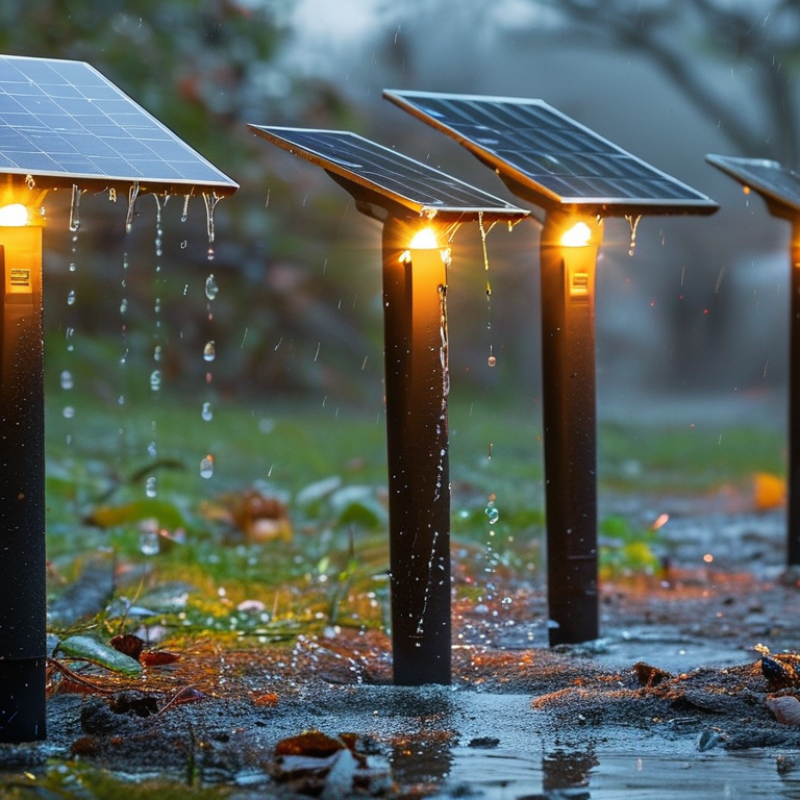
Understanding IP Ratings for Outdoor Solar Lights
Understanding IP Ratings for Outdoor Solar Lights
An IP rating shows how well an outdoor solar light resists dust and water. The first number measures solid-particle protection. The second measures moisture resistance. For example, IP65 means the light is dust-tight and protected against water jets. It does not mean the light can stay underwater.
For most garden paths, patios, and walls, IP65 is a practical starting point. It handles rain, splashes, and ordinary outdoor dust. IP66 offers stronger protection during heavy rain or windy weather. Lights placed near ponds, sprinklers, or areas that may flood need greater care. IP67 can survive temporary immersion, but the installation must still prevent water from entering cable joints. The highest rating is not always the best choice. Design, seals, drainage, and battery quality also affect long-term performance.
Tips: Check the rating on the complete light, not only its packaging. Inspect the rubber seal before installation. Keep the solar panel clear of leaves and mud. Avoid placing the lamp where water collects after storms. An IP rating can protect the housing, but it cannot fix poor installation. I would also recheck exposed lights after winter. Small cracks may appear slowly, and that is easy to miss. A reliable choice matches the location’s actual moisture risk, rather than simply selecting the largest number.
How Weather Exposure Affects Solar Light Protection Needs
Outdoor solar lights face more than rain. Sunlight, dust, frost, insects, and wind-driven water slowly challenge their housings. The best IP rating depends on exposure, not marketing language. An IP rating has two digits: dust protection first, water resistance second. For a sheltered porch, IP44 may handle occasional splashes. Open yards usually deserve IP65, especially where storms strike from the side. IP67 offers stronger temporary immersion protection, but it does not make every light indestructible.
Weather exposure changes over time. A light beside sprinklers may receive more water than one under a roof. Coastal air adds salt, while hot surfaces can weaken seals and batteries. Freezing temperatures may also reduce charging performance. IP testing happens under controlled conditions, not every real garden. That matters. A higher rating helps, but poor installation can still create trouble. Keep the panel clear, avoid placing the housing in standing water, and check rubber seals after severe weather. I once overlooked wind-blown dust as a major risk; it can enter through small gaps and reduce long-term reliability.
Tips: Choose IP65 for most fully exposed locations. Consider IP67 where flooding or heavy splashback is possible. Inspect the casing each season. Replace damaged seals promptly. Also check the mounting angle, because water often collects where the design seems flat.
Choosing the Right IP Rating for Different Outdoor Locations
What Is the Best IP Rating for Outdoor Solar Lights?
Choosing the right IP rating depends on the light’s exact outdoor location. A sheltered porch may only need IP44 protection against splashing water. However, an exposed garden path faces rain, dust, mud, and rotating sprinklers. IP65 is usually a stronger choice there. It is dust-tight and protected against water jets.
Locations near ponds, pools, or low areas need more careful planning. IP67 can handle temporary immersion, such as after heavy rain or accidental flooding. It does not mean the light should remain underwater. For coastal gardens, salt air can damage fittings even when the IP rating looks suitable. Look for corrosion-resistant materials and sealed cable connections.
Small details matter. Place the solar panel where leaves cannot cover it. Keep the lamp away from direct sprinkler impact when possible. In practical outdoor checks, I have found that poor positioning causes more failures than weak sunlight alone. A high rating cannot repair a cracked seal or loose connector. Check the rating after installation, too. I once saw an IP65 light fail because water collected around an incorrectly angled housing. The rating was adequate. The installation was not. Temperature, sunlight, and battery quality also deserve attention, although they are not shown by the IP code.
Comparing Common IP Ratings for Solar Lighting Applications
What Is the Best IP Rating for Outdoor Solar Lights?
Comparing Common IP Ratings for Solar Lighting Applications
The best IP rating depends on location, drainage, and cleaning exposure. IEC 60529 defines the first digit for solids and the second for water. IP44 blocks objects above one millimeter and resists splashing water. It suits sheltered paths, balconies, and covered entrances. However, it may struggle beside sprinklers or wind-driven rain.
IP54 offers limited dust protection and water resistance from multiple directions. IP65 is dust-tight and withstands water jets, making it a stronger choice for open gardens and driveways. IP66 handles more powerful jets. IP67 adds temporary immersion protection, normally up to one meter for 30 minutes under IEC 60529 testing. Choose it for low-mounted fixtures, drainage channels, or areas that occasionally flood. IP68 sounds superior, but its test depth and duration depend on the manufacturer’s specification.
The need for reliable outdoor hardware is growing. The IEA PVPS Trends 2024 report recorded approximately 447 GW of new solar photovoltaic capacity added globally in 2023. More deployed solar equipment also means more lighting installed in exposed environments. Field inspections often reveal a mistake: buyers select IP65, then ignore ultraviolet exposure, salt spray, impact, and battery sealing. IP testing does not cover every failure mode. Coastal properties may need corrosion-resistant fasteners, while snowy regions need careful drainage. A higher rating is useful, but not magical. Check the test standard, installation height, cable entry, and seasonal temperature range before choosing.
What Is the Best IP Rating for Outdoor Solar Lights?
Comparing common IP ratings for solar lighting applications. The first digit measures protection against solid objects and dust, while the second digit measures protection against water.
IP44 protects against objects larger than 1 mm and water splashes. IP54 offers limited dust ingress protection. IP65 is dust-tight and protects against water jets, making it a strong choice for most exposed outdoor solar lights. IP66 adds protection against powerful water jets, while IP67 is designed for temporary immersion. Select the rating according to the fixture’s exposure to dust, rain, hose spray, and possible flooding.
Practical Tips for Installing and Maintaining Weatherproof Solar Lights
For outdoor solar lights, IP65 is often a practical minimum for exposed areas. The IP rating describes protection against dust and water. IP66 offers stronger resistance to powerful water jets. IP67 may tolerate temporary immersion, but it does not guarantee long-term underwater use. Always check the complete product instructions. A high rating cannot correct poor installation.
Place the light where its panel receives several hours of direct sunlight daily. Watch nearby trees, roof edges, and seasonal shadows. Angle the panel toward the strongest available sunlight. Keep the fixture above standing water and away from sprinkler spray. Tighten covers gently, so the gasket remains evenly compressed.
Do not bury cable joints unless they are designed for underground use. Check the seal. I once installed a light under a balcony, assuming daylight was enough. It worked poorly during winter, and the mistake was obvious later.
Clean the panel every few weeks with a soft, damp cloth. Dust, pollen, and bird droppings can reduce charging noticeably. Inspect the housing after heavy rain, snow, or strong wind. Look for cracks, loose screws, cloudy covers, and trapped moisture. If condensation appears repeatedly, the seal may be failing. Replace damaged gaskets or the entire fixture when necessary. Battery performance also declines over time, especially in cold weather. Do not judge the light after one cloudy day. Track several nights before changing its position. My own maintenance routine is not perfect, but regular checks have prevented small faults from becoming expensive replacements.
Conclusion
Choosing the right IP rating is essential for outdoor solar lights because it determines how well the fixture resists dust, rain, moisture, and water exposure. The first digit indicates protection against solid particles, while the second measures resistance to water. What are the best IP ratings for waterproof outdoor solar lights? In most outdoor situations, a rating of IP65 or higher provides dependable protection against dust and rain, while IP67 may be more suitable for areas exposed to heavy storms, splashing, or temporary water immersion.
The ideal rating depends on location and weather conditions. Sheltered patios may need less protection, while open gardens, driveways, coastal areas, and poolside spaces require stronger weather resistance. During installation, position lights so water can drain away, keep seals and covers properly closed, and avoid damaging cable entries. Regularly clean the solar panel, inspect the housing for cracks, and check the battery compartment for moisture. Proper maintenance helps preserve both waterproof performance and lighting efficiency over time.

 Lumina Light