Choosing the right solar panel can shape a street light’s output, service life, and maintenance cost. This is where the question “Why choose monocrystalline over polycrystalline for street lights” becomes practical, not merely technical.
Monocrystalline panels use higher-purity silicon and usually deliver greater efficiency in limited space. That matters on narrow lamp tops, where every square centimeter counts. A monocrystalline panel may charge batteries more effectively during weak winter sunlight. Polycrystalline panels often cost less, but they generally need more surface area for similar power. Their blue, speckled appearance also differs from the darker finish of monocrystalline modules.
Dr. Martin A. Green, a leading photovoltaic researcher, has emphasized, “Efficiency matters, but performance in the field matters more.” This idea should guide the comparison. Real streets bring dust, shade, heat, rain, and changing traffic patterns. Laboratory ratings cannot tell the whole story. A panel that looks superior on paper may disappoint if its battery, controller, or installation angle is poorly matched.
This guide examines five practical monocrystalline and polycrystalline street-light options. It considers efficiency, nighttime runtime, temperature behavior, installation space, and long-term value. Some conclusions may feel less certain. Local weather can change the result. Budget pressure can also make polycrystalline panels reasonable for wide, sunny sites.
No single panel wins everywhere. The better choice depends on the complete lighting system.
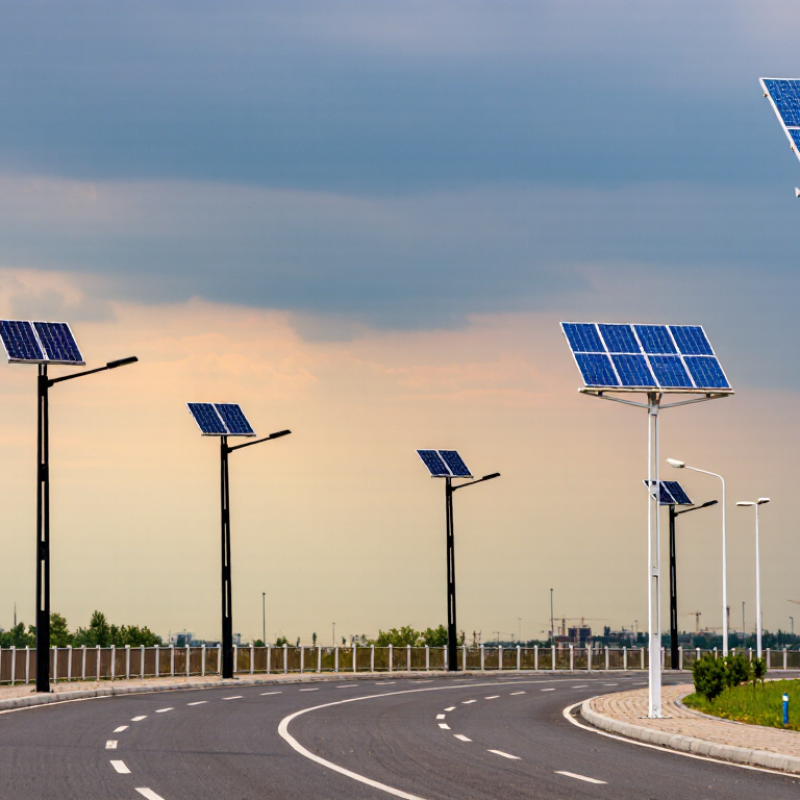
Solar cells determine how much sunlight a street light can convert into electricity. Monocrystalline cells commonly achieve about 18–23% efficiency in commercial modules. Polycrystalline cells usually reach approximately 15–18%, according to the Fraunhofer ISE Photovoltaics Report 2024. This gap sounds small, but it matters on narrow lamp poles. A 1.5-square-meter panel receiving strong sunlight may harvest noticeably more energy with monocrystalline cells.
The International Energy Agency Photovoltaic Power Systems Programme reported continued improvements in commercial module performance during its 2024 market review. Higher efficiency can support longer nighttime lighting, smaller panels, or better winter charging. That is useful when buildings, trees, or pole spacing limit roof exposure. A practical field check should measure panel orientation, shading, battery capacity, and local winter irradiance. Efficiency alone does not guarantee reliable lighting.
Polycrystalline panels can still suit wider installations with strict budgets. Their lower cell efficiency may require more surface area. That can increase wind loading and mounting complexity. I have seen specifications promise excellent output under laboratory conditions, yet real streets delivered less energy because dust and partial shade were ignored. This is where careful testing matters. A small pilot installation, monitored across cloudy weeks, can reveal more than a bright datasheet. Temperature also affects output, and the quoted percentage is rarely a permanent field result.
For street lights, monocrystalline and polycrystalline panels should be compared through real energy yield, not rated wattage alone. A temperature coefficient of −0.35%/°C loses less power in heat than −0.45%/°C. When a panel rises from 25°C to 65°C, the difference can reach 14% versus 18% below its rated output.
That matters on a dark roadside pole. A black panel may feel hot at midday, while the battery still needs several hours of night-time energy. The Fraunhofer ISE Photovoltaics Report 2024 identifies temperature as a key factor affecting crystalline-silicon module performance. It also shows that module technology and design influence actual output more than the mono or poly label alone. Modern monocrystalline modules often offer lower temperature losses, but some polycrystalline products remain competitive in cooler climates.
Check the datasheet carefully. Compare the coefficient, operating temperature range, low-light response, and measured annual yield. IEA PVPS Trends 2024 reports continued improvements in photovoltaic performance, yet laboratory ratings still use standard test conditions. Those conditions rarely match a dusty lamp installed above asphalt.
Small details matter. Poor ventilation can erase a theoretical advantage. I would also question any choice based only on peak watts; that shortcut is convenient, but incomplete. For hot regions, a −0.35%/°C panel may deliver more usable evening energy than a higher-rated panel at −0.45%/°C. Field measurements are still worth the effort.
Street-light design should start with winter energy demand, not panel chemistry. A 40-watt lamp operating 12 hours uses 480 watt-hours nightly. Three nights require 1.44 kilowatt-hours before system losses. After allowing for battery depth of discharge and controller losses, a practical battery may need about 2 kilowatt-hours of nominal capacity. Small errors matter.
Panel sizing must also replace daily consumption. In a location receiving three winter peak-sun hours, the array needs roughly 200 watts after derating. A 25% design margin is wiser under cloudy conditions. The Fraunhofer Institute Photovoltaics Report 2024 places commercial crystalline-silicon module efficiency commonly around 20–23%. Monocrystalline panels therefore reduce mounting area. Polycrystalline panels can still work, but they usually need more surface area. Roof space is not free.
Battery aging changes the answer. IEA PVPS Task 13 reports typical photovoltaic degradation near 0.5% annually, though real sites vary. I would size for the worst solar month, not the annual average. That was a mistake in an earlier spreadsheet. It looked efficient in summer, then failed after two dark nights. Keep the battery above its minimum temperature range, protect the panel from nearby shade, and verify three-night autonomy with measured load data. Two nights may be enough for mild climates. Three nights offers safer service, but increases cost and pole weight.
Lifecycle value matters more than panel price. Monocrystalline modules usually deliver higher efficiency, often around 20–23% in current products. Polycrystalline modules commonly provide lower efficiency and require more surface area. This difference matters on narrow poles, shaded roads, and compact solar street-light housings. A smaller panel can also reduce wind loading and mounting stress.
Both technologies can serve a 20–25-year design life when properly protected. NREL’s Photovoltaic Degradation Rates report found a median crystalline-silicon degradation rate near 0.5% annually. That equals roughly 88% of initial output after 25 years. IEA PVPS Task 13 also highlights weather exposure, humidity, and thermal cycling as major reliability factors. The panel is not the only concern. Batteries, controllers, seals, and LEDs often need earlier replacement.
Polycrystalline systems may reduce initial module costs, but extra panel area can increase poles, brackets, transport, and installation labor. Monocrystalline systems may cost more upfront, yet their higher output can support longer nighttime operation or smaller batteries. That calculation is site-specific. Real streets are messier. Dust, tree shade, snow, and poor tilt can erase the expected efficiency advantage. NREL’s Annual Technology Baseline also warns that project costs vary widely by installation conditions. A careful 25-year estimate should include battery replacement, cleaning access, component failures, and disposal. Payback models that ignore these items look attractive, but they are incomplete.
5 Best Monocrystalline vs Polycrystalline Street Lights?
Five Best Choices: Match Cell Type to Climate, Budget, and Lighting Class
For hot, dry streets with strong sunlight, monocrystalline solar panels are often the stronger choice. Their higher efficiency can support longer lighting hours from a smaller panel. This suits narrow roads, compact poles, and higher lighting classes. Check battery temperature ratings too. Heat can reduce storage performance.
For cloudy or mixed-weather areas, choose a polycrystalline system when the budget is tight. Its lower cost may allow more fixtures across a neighborhood. However, the panel may need greater surface area. Shade changes everything. For coastal roads, select corrosion-resistant housing and sealed cable entries, regardless of cell type.
For high-lux collector roads, pair efficient monocrystalline cells with a carefully sized battery. The design should meet required illumination and uniformity, not just advertise brightness. For low-traffic lanes, a polycrystalline light may provide practical value with simpler output requirements. For locations with winter snow or frequent dust, choose the panel that remains serviceable after cleaning and seasonal losses.
Ask for a photometric report, autonomy figures, and the expected performance under local sunlight. Measure before buying. A neat rule can fail at a shaded intersection. I have seen oversized panels paired with weak batteries, creating bright evenings and dark mornings. Installation angle, pole spacing, and maintenance access deserve equal attention.
A 40-watt lamp running for 12 hours uses 480 watt-hours nightly. Three nights require 1.44 kilowatt-hours before losses.
A practical battery may need about 2 kilowatt-hours of nominal capacity. This allows for discharge limits and controller losses. Small errors matter.
Size them for winter demand and daily energy replacement. Three winter peak-sun hours may require roughly 200 watts after derating.
Cloudy weather, dust, shade, and poor tilt reduce real output. A 25% margin provides more reliable charging. It is not excessive.
Monocrystalline panels usually provide higher efficiency, often around 20–23%. Polycrystalline panels can work, but they generally need more surface area.
Not alone. Larger panels can increase bracket costs, wind loading, transport, and installation labor. Cheap can become less cheap.
Properly protected panels may support a 20–25-year design life. Output can decline about 0.5% annually. Weather changes everything.
Batteries, controllers, seals, and LED units often need earlier replacement. Include cleaning access, failures, and disposal in lifecycle estimates.
Two nights may suit mild climates with stable sunlight. Three nights offers safer service during dark weather, but increases cost and pole weight.
Do not rely on annual average sunlight. A system can look efficient in summer, then fail after two dark nights. Measure the real load.
Choosing the right solar cell technology is essential for reliable street-light performance. Monocrystalline panels typically deliver higher efficiency, around 18–23%, while polycrystalline panels generally provide 15–18% efficiency. The key question, “Why choose monocrystalline over polycrystalline for street lights,” depends on available space, local climate, energy requirements, and budget. Monocrystalline modules can produce more power from a smaller panel area, making them valuable for compact installations or locations with limited sunlight. However, polycrystalline technology may offer a practical lower-cost option when space is not restricted.
A complete design should also compare temperature coefficients, typically ranging from −0.35%/°C to −0.45%/°C, because heat can reduce energy output. Panels should be sized to support two to three nights of battery autonomy, while the system’s 20–25-year photovoltaic lifespan, maintenance needs, and replacement costs should be evaluated together. The five best choices ultimately match cell type with climate, available budget, required lighting class, panel space, and long-term lifecycle value.

Lumina Light