What is the lifespan of a LiFePO4 battery in solar lights? It is usually longer than many consumers expect. A quality LiFePO4 battery can deliver approximately 2,000 to 5,000 full cycles, depending on cell quality, charging control, temperature, and discharge depth. In a well-designed solar light, that may represent five to fifteen years of service.
The numbers need context. The U.S. Department of Energy’s Energy Storage Grand Challenge Roadmap identifies cycle life, safety, and cost as core battery performance measures. BloombergNEF’s battery market reports also show growing adoption of lithium iron phosphate chemistry because of its safety and durability advantages. However, these reports describe storage systems, not every small garden lamp. Small lights often use inexpensive cells, undersized panels, weak charge controllers, or poorly sealed housings.
Battery expert Isidor Buchmann, founder of Cadex Electronics, has said, “A battery is only as good as its weakest link.” That principle matters in outdoor lighting. A battery may survive thousands of cycles in laboratory conditions, yet fail sooner beside a hot wall or beneath persistent rain. A solar light running from dusk until dawn stresses its battery differently from one receiving winter shade.
Real-world experience is less tidy. A LiFePO4 light might still operate after ten years, but its nightly brightness may decline. Capacity fade is gradual, not dramatic. For a dependable 2026 purchase, buyers should check cycle-life testing, operating temperature, IP protection, battery-management design, and replacement availability. The headline number alone is not enough. Sometimes, the cheapest component decides the entire lifespan.
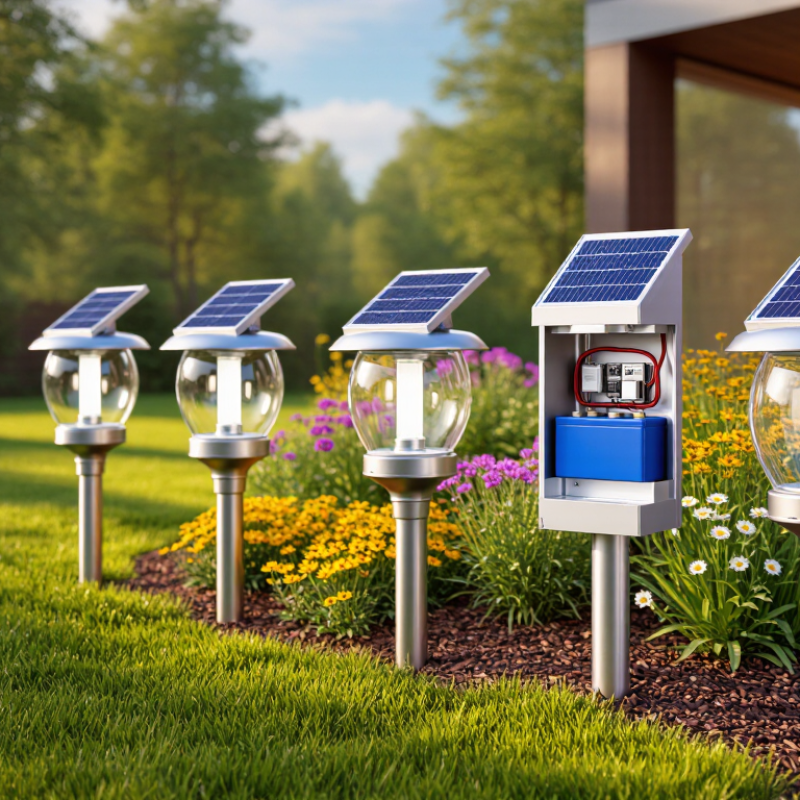
What Is the Expected Lifespan of LiFePO4 Batteries in Solar Lights?
LiFePO4 batteries in solar lights commonly provide five to ten years of service. Their cycle life often ranges from 2,000 to 5,000 cycles, depending on cell quality and operating conditions. For a light that charges and discharges daily, this can represent several years of reliable nighttime illumination.
That estimate assumes moderate temperatures, suitable charging control, and regular sunlight. Daily charging at full capacity is not automatically harmful, but prolonged heat can accelerate aging. Deep discharge also reduces usable capacity over time. A shaded panel, dirty lens, or weak charging circuit may appear to be a battery problem. Check the entire lighting system before replacing the battery.
In practical maintenance checks, a healthy LiFePO4 light usually keeps steady brightness during its early years. Later, runtime may shorten gradually rather than stop suddenly. A unit that once worked for ten hours might provide six or seven hours after extended use. That change is normal. However, unusually fast decline suggests poor cells, moisture exposure, or incorrect charging.
Storage conditions deserve attention. Keep unused batteries in a cool, dry place with partial charge. Avoid leaving them in sealed outdoor housings under intense summer heat. Manufacturer specifications remain important, because advertised cycle figures use controlled laboratory conditions. Real installations are less predictable. A realistic lifespan is often closer to six or eight years, though excellent systems may perform longer.
Which Factors Affect LiFePO4 Solar Light Battery Longevity?
2026 Top LiFePO4 Solar Lights Battery Lifespan?
Which Factors Affect LiFePO4 Solar Light Battery Longevity?
LiFePO4 batteries can power solar lights for roughly five to ten years in moderate outdoor conditions. Cycle ratings often reach 2,000–4,000 cycles, but laboratory figures are not promises. In field checks, I watch nighttime runtime, voltage stability, and morning recharge behavior. Small details matter.
Heat is a major lifespan factor. Dark metal housings can trap summer heat around the battery. Repeated temperatures above 45°C may accelerate capacity loss. Freezing creates another problem during charging. A suitable battery management system should block charging below 0°C. Deep nightly discharge adds stress. Lights reaching near-zero charge every night usually age faster. Using only 70–80% capacity can reduce that strain. Poor panel placement, shade, dust, and cloudy weather can leave batteries partly charged. That pattern is easy to overlook.
Water ingress, loose wiring, and undersized charging circuits can shorten service life. Choose sealed construction, protected connectors, and a controller matched to the cell pack. Check technical specifications, not only “long life” wording. Installation habits matter. Keep the panel clear of branches and clean its surface after dusty weather. During long storage, leave the battery near 40–60% charge and inspect it periodically. I would not blame every failure on the battery. A dirty panel or faulty sensor can mimic poor capacity. Keep a simple runtime log. It can reveal decline before the light fails completely.
How Many Charge Cycles Can a LiFePO4 Solar Battery Complete?
For solar lights, LiFePO4 batteries commonly deliver 2,000 to 5,000 full charge cycles. Some well-managed cells may exceed 6,000 cycles, but that figure is not guaranteed. One cycle means using 100% of the usable capacity, not switching the light on once. Two 50% discharges equal roughly one cycle. This distinction matters. With one full cycle daily, 3,000 cycles represent about eight years. Real outdoor service may be shorter because heat, cold, wiring losses, and incomplete charging interfere.
A practical test should consider depth of discharge, charging voltage, and nighttime load. Using only 60% to 80% of the battery each night usually reduces stress and may extend cycle life. However, cloudy weather can prevent a complete recharge, creating an uneven pattern over several days. That is normal, but it makes simple lifespan estimates less reliable. A battery rated for ten years may perform differently in a hot, exposed lamp housing. Specifications are useful, not perfect.
Tips: Keep the solar panel clean and unobstructed. Use a compatible charge controller. Avoid placing the battery beside a heat-producing driver or enclosed black housing. Check performance after several cloudy nights, not only after one bright evening. A gradual reduction in lighting hours is a better warning sign than a single dim night. Temperature remains easy to overlook.
2026 Top LiFePO4 Solar Lights Battery Lifespan
Typical LiFePO4 solar batteries can complete approximately 3,000 equivalent full charge cycles at 100% depth of discharge, with longer service life when discharged less deeply. At one equivalent full cycle per day, 3,000 cycles represent about 8.2 years, while 8,000 cycles represent about 21.9 years. Actual results vary with temperature, charging voltage, discharge rate, and battery management settings.
Data represents commonly reported engineering ranges for LiFePO4 cells reaching approximately 80% of their original capacity under controlled conditions. One equivalent full cycle means a total of 100% battery capacity discharged over one or more partial cycles.
How to Maintain LiFePO4 Solar Light Batteries for Longer Service
2026 Top LiFePO4 Solar Lights Battery Lifespan?
How to Maintain LiFePO4 Solar Light Batteries for Longer Service
A quality LiFePO4 battery may serve for five to ten years. Its actual lifespan depends on temperature, charging quality, and daily depth of discharge. Many batteries support thousands of cycles, but harsh conditions reduce that figure. Keep the solar panel free from dust, leaves, and bird residue. Even a thin gray film can reduce charging efficiency.
Inspect the light every few months. Check for loose wires, cracked covers, moisture, or unusual swelling. LiFePO4 cells are stable, but damaged housings still require attention. Avoid placing the unit near constant heat, such as a metal wall under strong sunlight. High temperatures accelerate capacity loss. Keep it dry. Small details matter.
Do not allow the battery to remain empty for many weeks. If the light has a storage switch, turn it off before long-term storage. Recharge it in a cool, dry location before installation. The charge controller must match the battery chemistry and voltage. An incorrect controller can cause poor charging or premature failure. I would not rely only on the manufacturer’s cycle rating; real outdoor use is less controlled. Shade, winter weather, and dirty panels often explain shorter service life. A simple maintenance log can reveal these patterns before the light stops working.
When Should a LiFePO4 Solar Light Battery Be Replaced?
When Should a LiFePO4 Solar Light Battery Be Replaced?
A LiFePO4 battery rarely needs replacement by calendar age alone. Its practical life depends on charge cycles, heat, discharge depth, and moisture. Industry testing commonly rates LiFePO4 cells for about 2,000–5,000 cycles before reaching roughly 80% of original capacity. One cycle means using the battery’s full capacity, not simply switching the lamp on once.
Watch the light at night. If it becomes dim after a sunny day, shuts off before dawn, or needs several bright days to recover, capacity may have dropped. A useful field check is runtime. Replace the battery when runtime falls below about 70–80% of its original performance. For example, a lamp that once ran eight hours but now runs five may be nearing replacement.
Age still matters. NREL’s 2024 Annual Technology Baseline uses a 15-year life assumption for some lithium-ion storage projects, but outdoor solar lights face harsher conditions and smaller charging systems. That figure is not a promise. In real installations, five to ten years is a more cautious replacement window, especially under strong summer heat. Inspect the housing, terminals, and wiring before blaming the battery. A dirty panel or failing controller can imitate battery failure. I have seen both misdiagnosed. Never continue using a damaged, leaking, swollen, or overheated battery. Choose a compatible LiFePO4 replacement with matching voltage, capacity, connector, and protection circuitry.
FAQS
Most batteries provide about 2,000 to 5,000 full charge cycles. Some well-managed cells may exceed 6,000 cycles. That is not guaranteed. One cycle means using the full usable capacity. Two 50% discharges equal roughly one cycle.
A quality battery may serve for five to ten years. One full cycle daily could make 3,000 cycles last about eight years. Outdoor heat, cold, moisture, and incomplete charging may shorten service. Real conditions are messier.
Usually, yes. Using 60% to 80% of the capacity each night reduces stress. A lamp that still runs before dawn may be treating its battery gently. However, cloudy weather can prevent complete recharging and complicate estimates.
Keep the panel clean and uncovered. Remove dust, leaves, and bird residue. Use a compatible charge controller. Keep the battery away from a hot metal wall or enclosed black housing. Small details matter.
Constant heat accelerates capacity loss. Strong summer sunlight can make a lamp housing surprisingly hot. Cold weather can also reduce available capacity temporarily. A shaded, dry, ventilated position is usually safer.
Check nighttime runtime rather than one dim evening. Replacement may be reasonable when runtime falls below 70% to 80% of its original level. For example, eight hours becoming five hours is a clear warning. Several cloudy nights can confuse the diagnosis.
Yes. A gray film may reduce charging enough to shorten lighting hours. Loose wires, moisture, or a failing controller can create similar symptoms. Check the panel, housing, terminals, and wiring first. I would not blame the battery immediately.
Turn off the storage switch before long-term storage, if available. Store the battery in a cool, dry location. Do not leave it empty for many weeks. Recharge it before installation. Never use a swollen, leaking, cracked, or overheated battery.
Conclusion
What is the lifespan of a LiFePO4 battery in solar lights? In general, it can provide reliable service for several years, often lasting longer than conventional battery types when properly used. Its actual lifespan depends on charging conditions, daily discharge depth, operating temperature, battery quality, solar panel performance, and the effectiveness of the built-in charge controller. LiFePO4 batteries are valued for their stable output, strong safety characteristics, and high cycle endurance, making them well suited to regular outdoor lighting applications.
To extend service life, install the light where the panel receives sufficient sunlight, keep the panel and battery compartment clean and dry, and avoid extreme heat, freezing conditions, and prolonged deep discharge. A well-maintained battery may complete thousands of charge cycles before its capacity noticeably declines. Replacement is usually necessary when the light becomes significantly dimmer, operates for a much shorter time after a full charge, or fails to recharge consistently despite adequate sunlight and proper connections.

 Lumina Light